
The breed standard is the blueprint for which all breeding decisions are made here at Carenci.
We consider all physical characteristics of both the Sire and Dam as well as genetic testing to uphold our responsibity of breed preservation of the Pembroke Welsh Corgi
Pembroke Welsh Corgi
Breed Standard
General Apprearance: Low set, strong, sturdily built, alert and active, giving impression of substance and stamina is small space
Characteristics: Bold in outlook, workmanlike
Temperament: Outgoing and friendly, never nervous or aggressive
Head and Skull: Head foxy in shape and appearance, with alert, intelligent expression, skull fairly wide and glat between ears, moderate amount of stop. Length of . foreface to be proportion to skull 3 to 5. Muzzle sightly tapering. Nose Black
Eyes: Well set, round, medium size, brown, blending with colour of coat
Ears: Pricked, medium sized, slightly rounded. Line drawn from tip of nose through eye should, if extended, pass through, or close to tip of ear.
Mouth: Jaws strong with perfect, regular and complete scissor bite, i.e. upper teeth closely overlapping the lower teeth and set square to the jaws.
Forequarters: Lower legs short and as straight as possible, forearm moulded round chest. Ample bone, carried right down to feet. Elbows fitting closely to sides, neither . loose nor tied. Shoulders well laid, and angulated at 90 degrees to the upper arm.
Body: Medium length, well sprung ribs, not short coupled, slightly tapering, when viewed from above. Level topline. Chest broad and deep, well let down . between forelegs
Hindquarters: Strong and flexible, well angulated stifle. Segs short. Ample bone carried right down to feet. Hocks straight when viewed from behind
Feet: Oval, toes strong, well arched, and tight, two centre toes slightly advance of two outer, pads strong and well arched. Nails short
Tail: Short, preferably natural. Docked: Short (side note: docking is illegal in Australia, and natural bob tails come in varying lengths) . Undocked: Set in line with topline. Natural carriage above topline when moving or alert.
Gait/ Movement: Free and active, neither loose nor tied. Forelegs move well forward without too much lift, in unison with thrusting action of hindlegs.
Coat: Medium length, straight with dense undercoat, never soft, wavy or wiry
Sizes: Weight: Dogs 10-12kgs Bitches: 9 - 11kgs
Faults: Any departure from the foregoing points should be considered a fault and the seriousness with which the fault should be regarded should be in exact . proportion to its degree and its effect upon the welfare of the dog
Notes: Male animals should have two apparently normal testicles fully descended into the scrotum
The breed standard is the guideline which describes the ideal characteristcs, temperament, and appearance of a breed and ensures that the breed is fit for function with soundness essential. Breeders and judges should at all times be mindful of features which could be detrimental in any way to the health, welfare or soundness of the breed.
GENETIC DISEASE
The 2 most commom genetic diseases that are tested for in Pembroke Corgis are Degenerative Myleopathy (DM) and Von Wilebrands Disease (vWD)
von Willebrands Disease
von Willebrand disease is a bleeding disorder that causes blood not to clot peroperly and can lead to unusually heavy bleeding and bruising. It is caused by a lack of vWD protein, which is referred to as vWF. This protein acts as a glue holding the platelets together on a wound. In extreme cases vWD can cause severe illness or even death.
There are both DNA and clinical tests that can detect vWD. The 3 most widely used are
DNA tests are most commonly performed by mouth swab or blood test. The collection will be sent to a genetic lab, with the results showing if your dog is at risk, a carrier or clear from the inheritable gene.
vWF assay is a blood test taken by your veterinarian, which will mesure the amount of vWF protein in your dogs blood. Puppies can be tested as early as 6 weeks of age. For the most accurate results it is recommended that the test be performed several times on different days.
Buccal mucosal bleeing time test. This is a clotting test performed by your veterinarian using a specific device, which will determine how long it will take for the blood to coagulate. The result can be influenced by patient varaibles and device positioning.
At present, no single test is comprehensive enough to detect all types of vWD and the severity with which it will affect each individual dog. Science is rapidly advancing and it is hoped diagnoses will become more accurate in the future. NOTE: not all dogs that test positive will present clinical signs of the disease.
There are three types of von Willebrand disease in dogs. Pembroke Corgis which are affected by vWD have in all known cases been diagnosed with Type 1.
Type 1 - there are fewer amounts of vWF proteins in the blood. Symptoms can range from nil to mild to moderate
Type 2 - there are some vWF proteins in the blood. Symptoms can range from moderate to severe
Type 3 - there are little to no vWF proteins in the blood. This is the most severe from.
If your dog is at risk or has been diagnosed with any type of vWD, it is important to inform your vet so they area able to appropriately alleviate the symptoms during surgery or trauma
Degenerative Myelopathy (DM)
Degenerative Myelopathy in Corgis is a complex inheritable disease which affects the spine and co-ordination of middle aged to mature dogs. DM does not cause the dog any pain, it will lead to weakness in the hind limbs and eventually paralysis. This disease is untreatable, though the dog can be supported with aids such as wheelchairs for quality of life.
Diagnosis is difficult, and Veterinarians will often rule out other known neurological diseases first. The only way to confirm DM is by postmortem and histology of the spinal cord once the dog has deceased.
The actual cause of DM is still unknown. It is known that a mutation of the SOD-1 gene occurs in all dogs that have been diagnosed with DM. However, I feel it important to note that not all dogs with the SOD-1 gene will be affected by the disease. In fact, a study conducted in the USA showed that less than 1.1% of corgis that were diagnosed at risk of the SOD-1 gene developed the disease. (There is a detailed article on the PWCCA website from Dr Jerold S Bell DVM).
The genetic test for Degenerative Myelopathy is a test for the SOD-1 mutation. There are other factors involved in the development of DM that are yet unknown, so naming it a test for DM is misleading.
Many corgis carry or are affected by the SOD-1 gene, these dogs are true ambassadors of the breed both in type and temperament. If you purchase a dog that is free of the SOD-1 mutation, your dog will not develop the disease. However, it is also important for breeders to maintain and preserve the heritage of both the Cardigan and Pembroke Corgi as well as being conscious of health and genetic testing available.
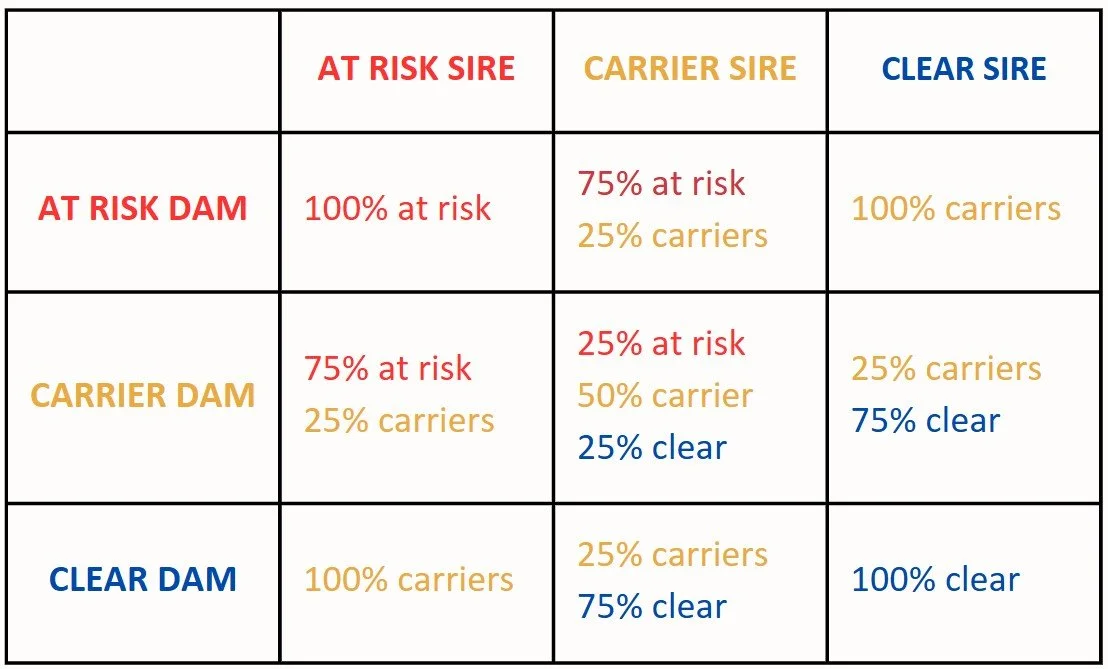
Hereditary Table
The table shows the probable likelihood of breeding outcomes from Genetic Disease. With the exception of dogs that fall with the 100% category, it is unknown exactly which gene will be passed down. Percentages can vary in each individual mating
At Carenci Corgis we evaluate each mating, taking into consideration health testing, conformation, temperament and breed type. All of these factors contribute to a happy, healthy Welsh Corgi, which will enrich your life for many years.